What if the very walls of your home could do more than just divide space, acting instead as a silent guardian against the relentless humidity of the Arabian Gulf while elevating your interior to a state of timeless grace? Many residents across the Emirates have experienced the genuine disappointment of watching generic finishes succumb to the 90 percent humidity levels of a Dubai summer, where the constant cycle of intense heat and artificial cooling often causes inferior wall paneling to swell and warp. We believe that your private sanctuary deserves better than mass-produced solutions that fail to respect the local climate. We understand that inviting colleagues into your home is a matter of profound trust, and you deserve a result that feels both personal and permanent.
This guide is designed to provide you with the gentle guidance needed to appreciate the evolving aesthetic landscape of 2026, ensuring you select materials that offer both artisanal beauty and industrial-grade longevity. You will discover how modern, climate-conscious installation techniques can protect your investment from the unique environmental pressures of the UAE while achieving a finish that is truly quietly exceptional. We will walk you through the most resilient materials and sophisticated styles that promise a seamless, non-disruptive transformation for your living space.
Key Takeaways
- Explore the shift from simple decoration to architectural transformation, understanding why textured surfaces are replacing minimalist aesthetics in Dubai’s most elegant residences.
- Discover how to select wall paneling materials that offer both beauty and durability, specifically engineered to withstand the unique contrast between external heat and internal climate control.
- Identify the leading trends for 2026, from the warmth of fluted wood to the organic appeal of stone textures, and how they contribute to a biophilic living experience.
- Learn the art of integrating panels with premium interior painting and wallpaper to ensure your home transformation feels cohesive, intentional, and quietly exceptional.
- Understand why meticulous preparation and artisanal craftsmanship are the defining factors in moving beyond a standard installation to a truly bespoke finish.
The Evolution of Wall Paneling in Dubai’s Modern Interiors
The transition from a simple house to a "Quietly Exceptional" home often begins with the realization that walls are more than mere boundaries. In Dubai, the design trend for 2026 is moving decisively away from the sterile, minimalist white finishes that once defined modern luxury. Homeowners are now seeking an architectural transformation that offers both depth and character. Wall paneling serves as the bridge between basic construction and artisanal design, providing a structural elegance that elevates the entire living experience through texture and shadow.
To appreciate this shift, we can look at The Evolution of Wall Paneling, which details how these surfaces transitioned from functional insulation to a symbol of high-end craftsmanship. In the premium real estate market of the UAE, adding bespoke paneling isn't merely a decorative choice; it's a strategic investment. High-quality finishes add a layer of sophistication that resonates with discerning residents, often increasing the perceived value of villas in neighborhoods like Emirates Hills or District One. It's a way of signaling quality without needing to shout, embodying a sense of quiet confidence and reliability in the home's design.
Architectural Impact on Local Villa Styles
In the expansive open-plan layouts of Arabian Ranches, large walls can often feel hollow or cold. We use wall paneling to introduce rhythm and scale, breaking up vast stretches of plaster with vertical lines that draw the eye upward. In Jumeirah’s high-ceilinged apartments, the trend has moved away from traditional waist-high wainscoting. Instead, we see a preference for full-height installations that create a sense of intimacy and grandeur. This architectural intervention transforms a standard room into a curated sanctuary, making large spaces feel intentional rather than empty.
The Emotional Resonance of Texture
The feel of a home is dictated by its surfaces, and there is a profound psychological benefit to tactile wall treatments. While the industrial aesthetic of exposed concrete dominated the early 2020s, Dubai residents are now gravitating toward warmer, organic finishes. In a digital age where our interactions are often flat and glass-based, the physical presence of fluted wood or soft fabric panels offers a grounding effect. Our colleagues focus on these details because we believe the sanctity of the home depends on creating a space that feels sincere and protective. Moving toward these softer textures helps a house feel like a permanent refuge from the fast-paced city life outside.
Leading Wall Paneling Trends for 2026: From Fluted Wood to Stone Textures
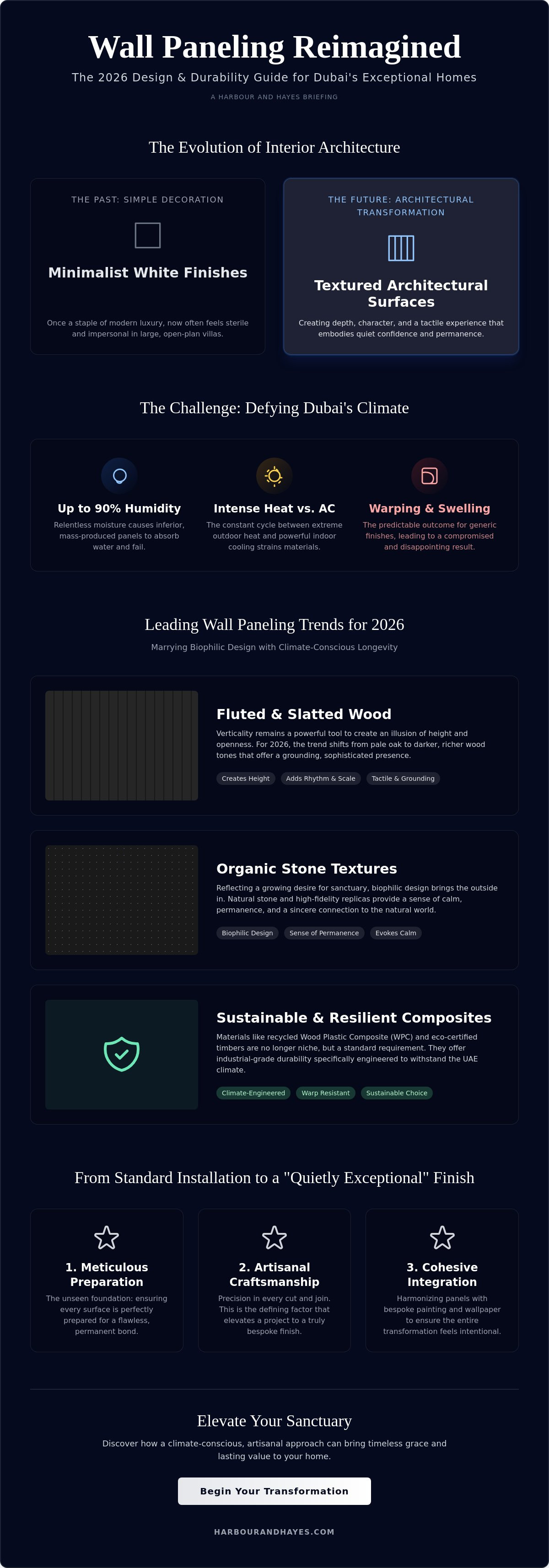
The evolution of Dubai’s interior landscape reflects a growing desire for sanctuary, where the home acts as a vibrant counterpoint to the city’s rapid pace. Biophilic design has transitioned from a niche preference to a foundational element of local decorating, as homeowners seek to reconnect with organic textures. This shift is particularly evident in the selection of wall paneling, where materials are chosen for their ability to evoke a sense of calm and permanence. Sustainable options like recycled Wood Plastic Composite (WPC) and timber sourced from certified eco-friendly forests are now standard requirements for the conscious resident. Expert forecasts regarding Leading Wall Paneling Trends for 2026 suggest a move toward surfaces that offer tactile depth and a sincere connection to the natural world. Our approach focuses on these enduring materials because they provide a sense of stability and craftsmanship that transcends fleeting fashions.
The Fluted and Slatted Wood Movement
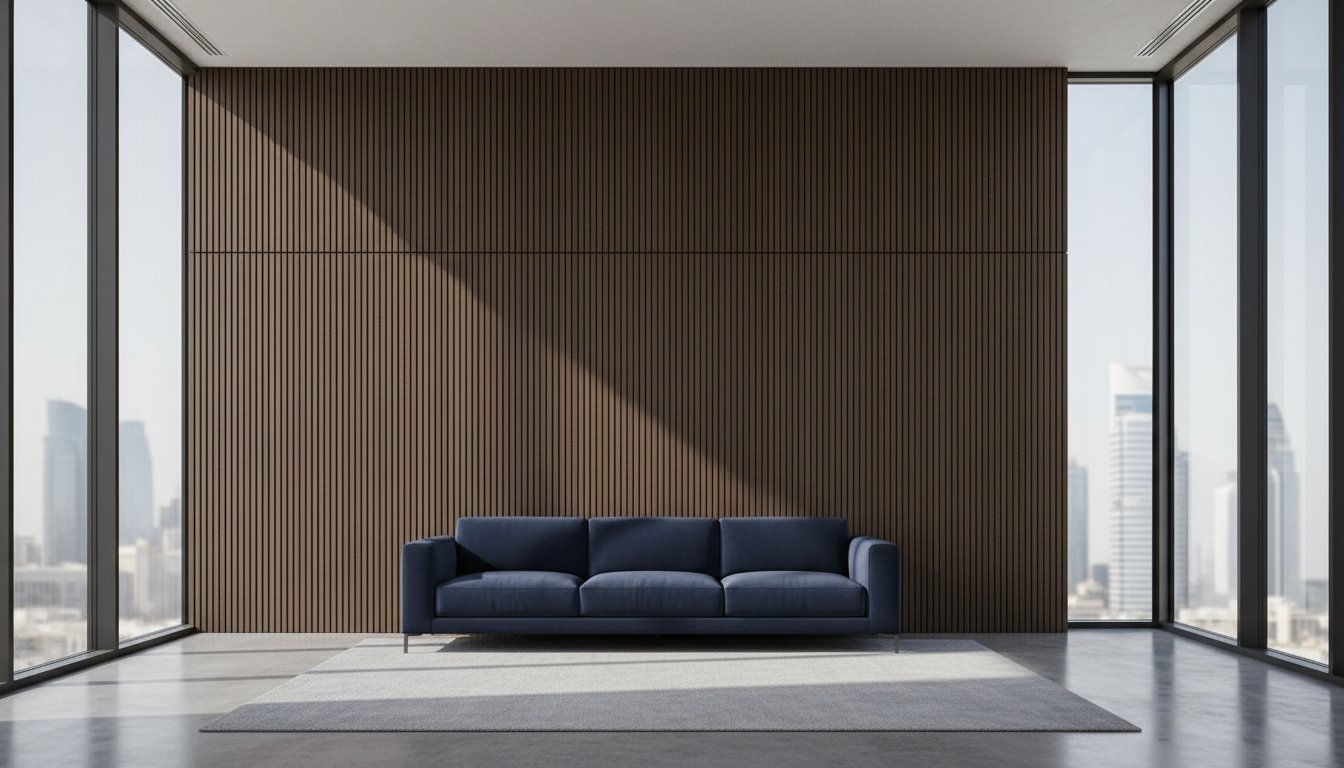
Verticality remains a powerful tool in the artisan’s kit for creating a sense of openness. By using slender wood slats, we create an illusion of height that makes even standard apartment ceilings feel expansive and airy. For 2026, the trend moves away from pale, honey-toned oaks toward the sophisticated depth of charred oak and rich walnut. Our colleagues often recommend pairing these textures with hidden LED strips tucked into the recesses; this provides a soft, atmospheric glow that highlights the precision of the woodwork. If you're considering how these textures might transform your own living space, our team offers gentle guidance on selecting the right finish for your home’s unique light and layout.
Stone and Mineral Textures
The desert’s natural elegance is finding its way indoors through stone-look panels that mimic the porous beauty of Travertine and the raw strength of concrete. These materials provide an artisanal vibe without the structural complications or the heavy floor-loading requirements of solid rock slabs. Lightweight concrete panels offer a refined industrial aesthetic that feels both modern and grounded. Because these panels are engineered for ease of installation, they allow for a seamless finishing process that respects the sanctity of your home environment. By choosing mineral textures, you invite a quiet confidence into your rooms, grounding the space with materials that feel as though they've existed for centuries. This trend is particularly effective in Dubai’s larger villas, where stone wall paneling can define a space without overwhelming the existing architecture.
Navigating Materials: Durability and Performance in the UAE Climate
A home in Dubai serves as a sanctuary from a demanding external environment. The technical reality of the region involves a significant thermal gradient, where exterior walls may reach 50 degrees Celsius while interiors are cooled to a constant 21 degrees. This 29-degree differential places immense physical stress on interior finishes. Choosing the correct wall paneling requires more than an eye for design; it demands an understanding of how materials react to constant air conditioning and seasonal humidity shifts. While low-grade PVC might seem cost-effective, it often lacks the structural integrity to withstand these cycles, leading to warping or unsightly gaps within the first 18 months of installation.
Our colleagues emphasize that Navigating Materials in the UAE Climate involves selecting surfaces that handle the fine desert dust prevalent in the Emirates. High-performance composites with anti-static coatings reduce the frequency of cleaning, ensuring the finish remains vibrant without the need for harsh chemicals. In a city where dust storms can increase particulate matter by 200% in a single afternoon, a non-porous finish is a practical necessity for maintaining a healthy indoor environment. This sincere approach to material selection reflects our commitment to craftsmanship and the long-term well-being of the families we serve.
WPC vs. Natural Wood in High-Humidity Zones
Wood Plastic Composite (WPC) is a resilient choice for 2026 wall paneling, offering 100% moisture resistance in coastal areas like Jumeirah where humidity often hits 65%. If your heart is set on the sincere warmth of natural timber, we ensure the wood is kiln-dried to a precise moisture content of 8% to 10%. To prevent buckling, our team utilizes professional spacing techniques, leaving a 2mm expansion gap every 2.5 meters to accommodate the natural movement of the fibers. This precision ensures that your investment remains as flawless as the day it was installed.
Acoustic Panels: More Than Just Aesthetics
Modern Dubai villas often feature marble or polished concrete floors, which, while beautiful, can create a harsh acoustic environment. Felt-backed panels are a central pillar of the "Quiet Luxury" movement, absorbing up to 90% of reflected sound. This is a compassionate design choice for the 40% of residents now utilizing dedicated home offices or private cinemas. These panels provide a gentle guidance for the senses, transforming a hollow room into a sophisticated, peaceful retreat that feels "Quietly Exceptional."
The Art of Integration: Combining Paneling with Bespoke Painting and Wallpaper
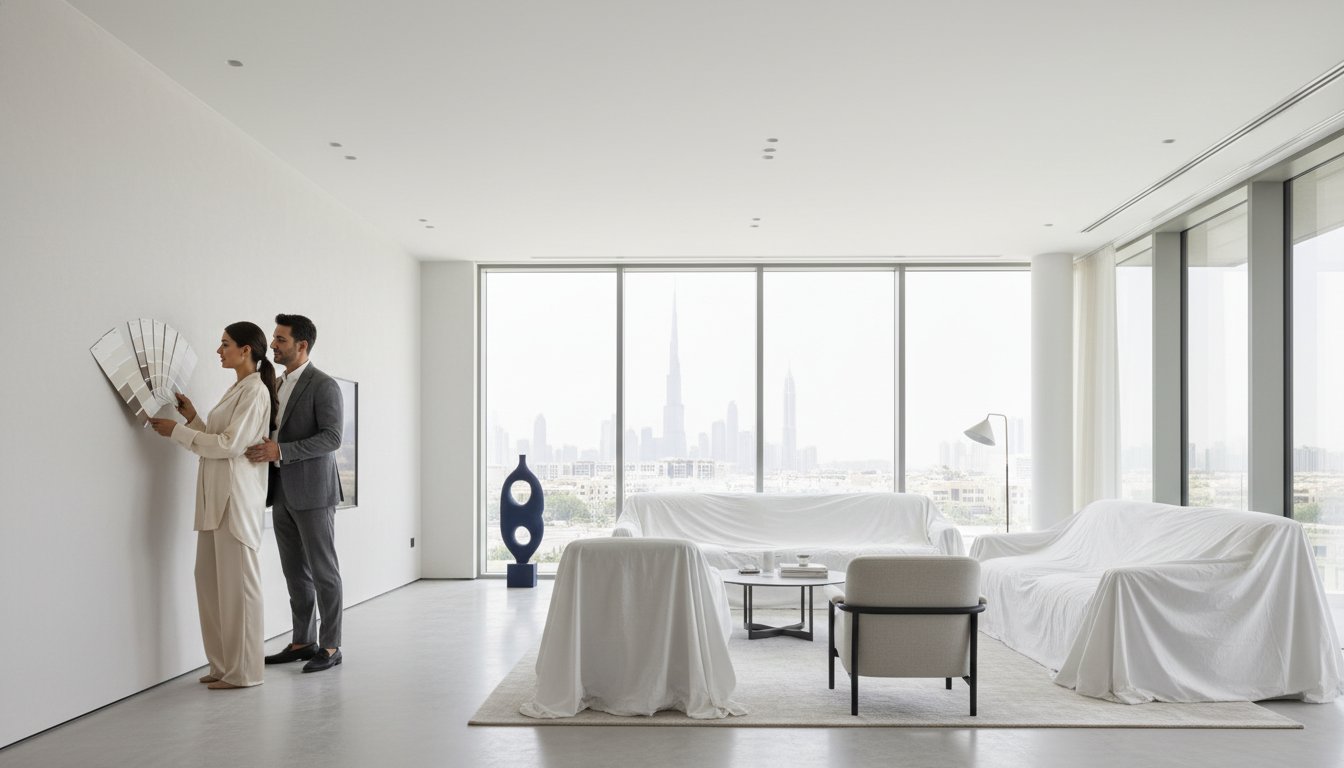
Wall paneling shouldn't be viewed as a solitary architectural addition. It's a foundational element that achieves its full potential only when thoughtfully paired with other finishes. At Harbour and Hayes, we believe a home's character emerges from the synergy between structure and surface. When you integrate textured panels with interior painting, you create a layered narrative that feels both intentional and timeless. This holistic approach ensures your walls aren't just boundaries, but the very soul of your living space. By treating the wall as a canvas where woodwork, pigment, and pattern meet, we help you craft a feature wall that serves as a quiet, exceptional anchor for the entire room.
Color Drenching and Paneling
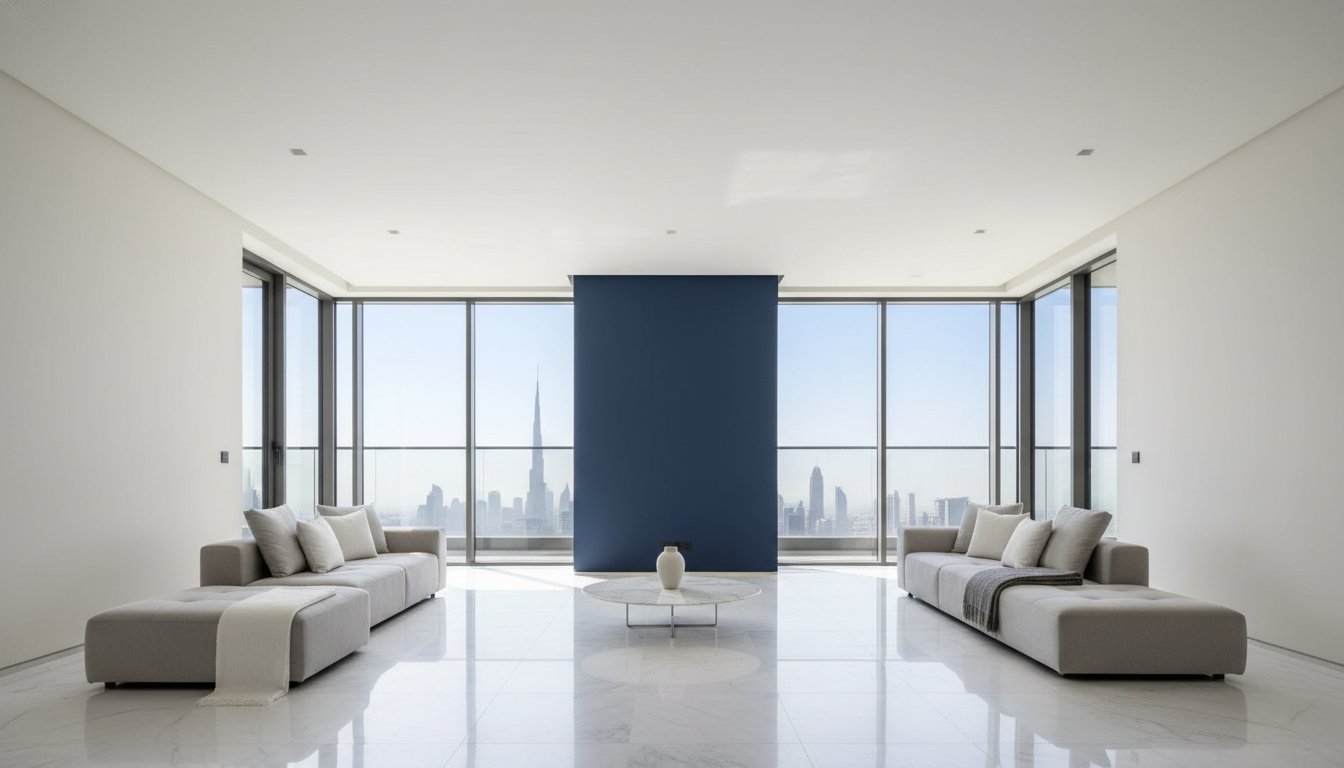
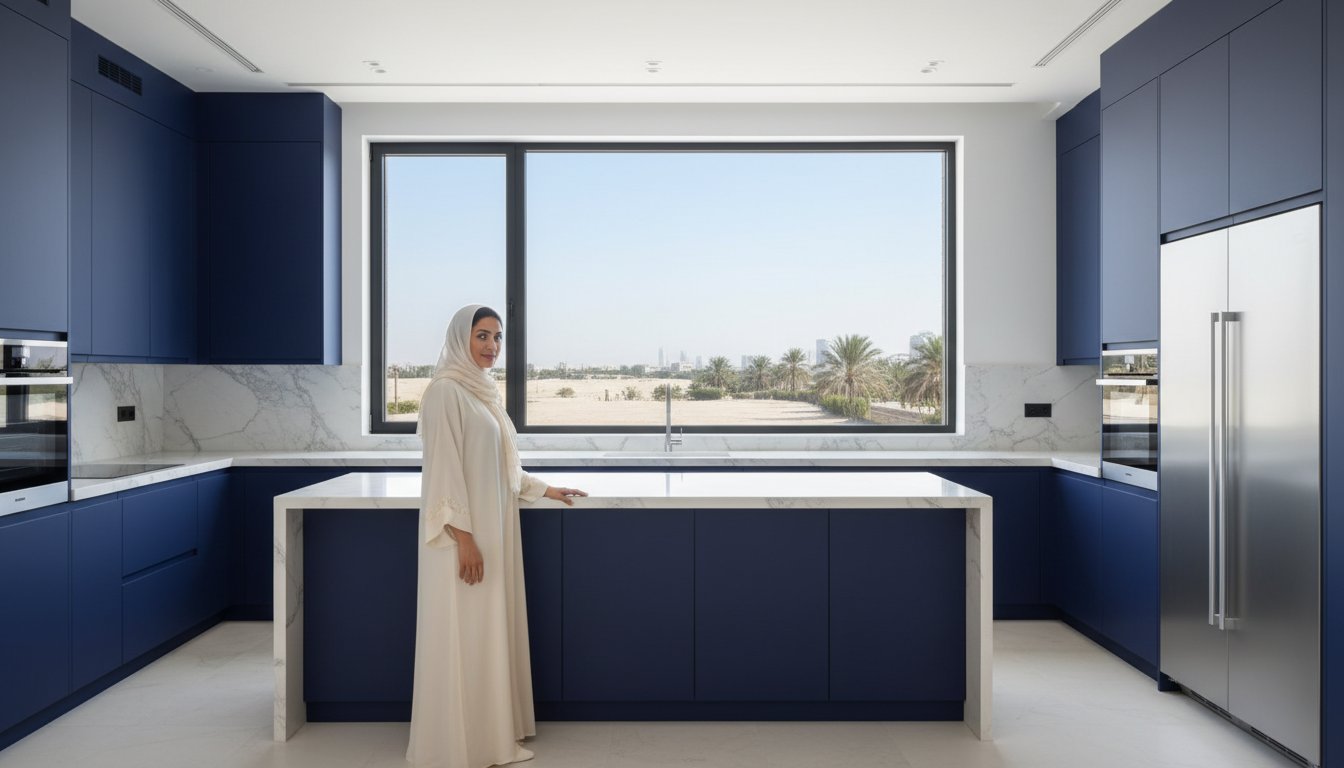
In 2026, the trend of color drenching has evolved into a sophisticated standard for Dubai villas. This technique involves painting the wall paneling, moldings, and the surrounding wall in the exact same hue. It creates a seamless, immersive environment that feels expansive and modern. Choosing the right finish is vital to this look. A matte finish absorbs the intense Dubai sunlight that streams through floor-to-ceiling windows, providing a velvety depth. Conversely, applying a satin finish on the raised moldings adds a subtle, luminous glow that highlights the precision of the craftsmanship. We often suggest cooler, muted tones to balance the 40-degree heat typical of July afternoons, ensuring your sanctuary remains visually refreshing.
Wallpaper and Paneling: A Sophisticated Duo
Framing wallpaper within wainscoting panels creates a gallery effect that transforms a simple room into a curated experience. This method allows you to introduce bold, intricate patterns without overwhelming the architectural balance of the space. Achieving a seamless wallpaper installation requires extreme precision where the paper meets the panel edges. For 2026, we're seeing a significant rise in metallic and silk-textured wallpapers that catch the light beautifully during the golden hour. These materials add a tactile luxury that complements the rigid structure of the wall paneling.
- Matte Finishes: These are ideal for high-sunlight areas like Jumeirah or Emirates Hills to prevent harsh glare on your walls.
- Silk Textures: Best used in formal dining rooms or master suites for a soft, acoustic-softening effect that feels deeply private.
- Frame Inserts: A perfect way to showcase heritage patterns or modern geometric designs as if they were bespoke pieces of art.
Crafting Your Vision: A Guide to Professional Installation and Finish
Choosing the right aesthetic for your home is only the beginning of the journey; the true transformation lies in the precision of the execution. At Harbour and Hayes, we believe there is a profound distinction between a standard "job" and the dedicated art of craftsmanship. While a simple installation might focus on speed, our "Quietly Exceptional" approach prioritizes the long-term integrity of your home. We understand that your living space is a sanctuary, so we treat every project with a level of sincerity and care that reflects that importance. Our colleagues aren't just installers; they are artisans who provide compassionate service, ensuring that the process of adding wall paneling to your villa is as harmonious as the final result.
The Importance of Meticulous Surface Preparation
The secret to a flawless finish is often hidden beneath the surface. We've found that thorough preparation is the most critical phase of any wall paneling project, as even the most beautiful materials cannot hide an uneven foundation. In many of Dubai's established villas, such as those in Jumeirah or Emirates Hills, walls can suffer from subtle shifts or underlying dampness caused by the coastal humidity. We take the time to ensure every surface is perfectly level and structurally sound before we begin. This precision cutting and leveling prevents the gaps and warping that often plague lower-quality installations. By addressing masonry issues early, we guarantee a seamless finish that stands the test of time.
Choosing Your Transformation Partner
Selecting a partner for your home improvement journey shouldn't feel like a high-pressure transaction. We offer gentle guidance to help you navigate the vast choices of textures and colors, ensuring the final selection complements your existing decor and personal style. When interviewing potential installers, it's vital to ask about their material sourcing and the specifics of their warranties. You should feel empowered to demand open communication at every stage of the decorating journey. A professional partner will provide a clear, structured timeline to minimize disruption to your family life. For a standard feature wall, you can typically expect the process to take 3 to 5 days, allowing for a methodical pace that never sacrifices quality for haste.
To ensure your project proceeds smoothly, consider these three essential steps during your planning phase:
- Ask for specific examples of previous work in similar Dubai properties to verify craftsmanship.
- Ensure the team uses industrial-grade adhesives and fixings specifically suited for the UAE climate.
- Confirm that the colleagues on-site respect your home's privacy and maintain a clean, organized workspace.
By focusing on these details, you ensure that the installation is a calm, steady presence in your renovation process. Our goal is to support your well-being through your environment, creating a space that feels refined and complete without the stress often associated with home improvements. When the work is handled with quiet confidence, the result isn't just a decorated wall; it's a home that truly breathes.
Bringing Your 2026 Vision to Life in Dubai
As we look toward 2026, the shift in Dubai interiors moves away from the purely ornamental toward textures that tell a story of tactile luxury and environmental resilience. We've explored how fluted wood and stone textures are set to dominate the aesthetic landscape, offering a sophisticated depth that thrives even when UAE humidity levels reach their peak during the summer months. Integrating bespoke wall paneling into your home isn't just about a visual upgrade; it's about a commitment to durability and a seamless blend with your existing decor.
Our team at Harbour and Hayes understands that your villa is a private sanctuary. We bring a philosophy of Quietly Exceptional craftsmanship to every project, ensuring that the installation process is as serene as the final result. As dedicated local Dubai experts, we specialize in villa transformations that honor your personal vision with gentle guidance and precision. We believe that a home should reflect the sincere warmth of those who live within it. It's this belief that drives our meticulous approach to every joint and finish.
If you're ready to begin your home's next chapter, we invite you to Request a Compassionate Consultation for Your Dubai Home. We look forward to supporting your journey toward a more vibrant and peaceful living space.
Frequently Asked Questions
Is wall paneling suitable for Dubai’s humid climate?
Wall paneling is highly suitable for Dubai homes when you select moisture-resistant materials such as treated MDF or PVC composites. While summer humidity levels in the UAE often exceed 80 percent, our colleagues ensure that every installation accounts for thermal expansion. We prioritize materials that maintain their structural integrity against moisture, providing a sincere sense of security for your interior investment through seasons of high humidity and intense heat.
How long does it take to install decorative wall panels in a villa?
Installing decorative panels in a standard Dubai villa typically requires 3 to 5 working days from the initial site preparation to the final finishing touches. This timeline allows our team to exercise the precision required for a result that is quietly exceptional, ensuring every seam is perfectly aligned. We recognize that your home is a private sanctuary, so we follow a methodical pace that respects your personal space while delivering artisanal quality.
Can I install wall paneling over existing wallpaper or paint?
You can install wall paneling over existing paint, but wallpaper should generally be removed to ensure a secure and lasting bond. While paint provides a stable surface for high-strength adhesives, the glue behind wallpaper can fail under the weight of heavy panels. Our approach involves a thorough assessment of your walls to ensure the substrate is sound, as this foundational step is vital for the longevity of the craftsmanship.
Which wall paneling material is the most durable for high-traffic areas?
Wood Plastic Composite (WPC) and high-density polyurethane are the most durable materials for high-traffic areas like hallways or entryways. These materials resist the scuffs and impacts common in busy households, maintaining their vibrant appearance for over 10 years with minimal wear. We often recommend these industrial-strength options for families who desire a sophisticated aesthetic that doesn't compromise on the practical needs of a bustling, modern home.
Do wall panels help with soundproofing in large, open-plan homes?
Wall panels significantly improve acoustic comfort in large, open-plan homes by absorbing sound waves and reducing echo. Specialized acoustic panels with felt backing can reduce noise transmission by up to 25 decibels, creating a more serene and peaceful environment. This technical solution is particularly effective in Dubai's tiled villas, where hard surfaces often cause sound to bounce, disrupting the quiet atmosphere we strive to help you cultivate.
How do I clean and maintain my wall panels in a dusty environment?
Maintaining your panels in Dubai’s dusty environment requires only a soft microfiber cloth and occasional gentle vacuuming with a brush attachment. Because fine desert dust can settle in the grooves of fluted designs, we suggest a monthly cleaning routine to keep the finish looking pristine. Avoiding harsh chemicals is essential; a simple damp cloth is usually sufficient to preserve the delicate finishing and artisanal quality of the material.
Is wall paneling a permanent change, or can it be removed later?
Wall paneling is generally considered a semi-permanent addition, though it can be removed if your design preferences evolve in the future. While the removal process might require minor plaster repairs and a fresh coat of paint to restore the original surface, it's a manageable transition for any homeowner. We provide gentle guidance on the best installation methods, such as using hidden clips rather than heavy adhesives, if you anticipate wanting to change the look later.